How China Influences Global Metal Prices: Understanding the World's Biggest Metals Market
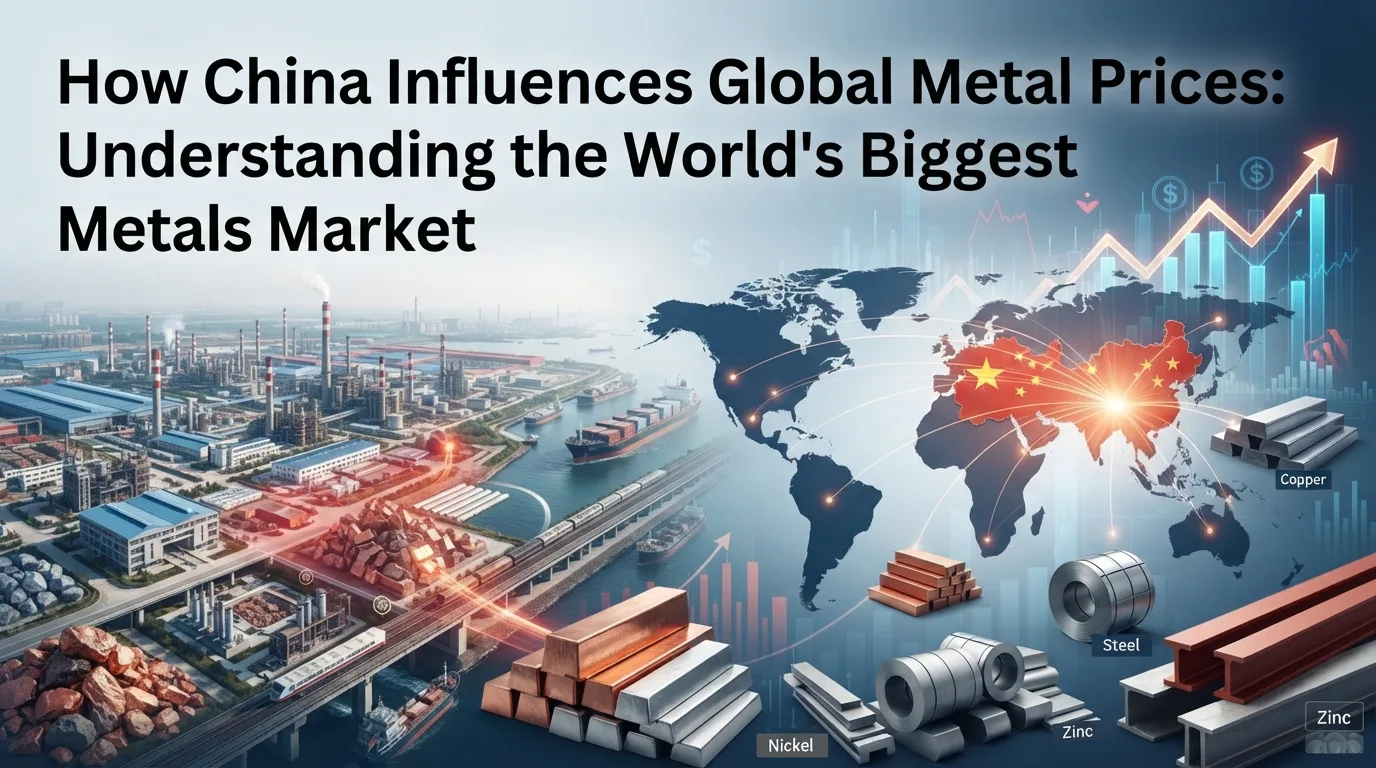
China plays a crucial role in shaping global metal prices through its massive manufacturing sector, infrastructure spending, industrial demand, and trade policies. Discover how China's economy influences the prices of aluminium, copper, steel, nickel, zinc, and other industrial metals, and why investors worldwide closely monitor its market trends.
We publish educational market explainers so readers can connect daily price movement with long-term investing concepts, common risks, and decision-making basics.
Published by Metal Stock Rates and reviewed under our editorial standards on Wednesday, July 8, 2026.
- How China Influences Global Metal Prices: Understanding the World's Largest Metals Market
- Why China Holds Such a Powerful Position
- Metals Most Affected by China's Economy
- How Economic Growth Changes Metal Prices
- China's Property Market and Its Effect on Metal Prices
- Electric Vehicles and Renewable Energy Are Creating New Demand
How China Influences Global Metal Prices: Understanding the World's Largest Metals Market
When investors discuss global commodity markets, one country consistently stands out as the biggest influence on metal prices—China. From aluminium and copper to steel, zinc and nickel, China's production, consumption and industrial policies play a vital role in determining price trends across international markets. Even relatively small changes in China's economic activity can trigger significant movements in global metal prices within a short period.
As the world's largest manufacturing hub and one of the biggest consumers of industrial metals, China has built an enormous supply chain that supports infrastructure development, construction, renewable energy, electric vehicles and consumer electronics. Because of this dominant position, traders, manufacturers and investors closely monitor Chinese economic data before making decisions in commodity markets.
Whether you are investing in metal stocks, tracking commodity prices or simply trying to understand why aluminium or copper prices fluctuate, knowing China's influence can help you make better-informed investment decisions.
| Quick Overview | Details |
|---|---|
| Primary Country | China |
| Main Impact | Global Metal Prices |
| Key Industries | Construction, Manufacturing, EVs |
| Affected Metals | Copper, Aluminium, Steel, Zinc, Nickel |
Why China Holds Such a Powerful Position
China's influence comes from both sides of the commodity market—it is one of the largest producers as well as one of the largest consumers of industrial metals. Massive investments in highways, railways, airports, real estate, renewable energy projects and manufacturing facilities have resulted in extraordinary demand for raw materials over the past two decades.
At the same time, China has developed one of the world's most advanced metal processing industries. Thousands of factories convert raw materials into finished products that are exported worldwide, making the country a critical part of global supply chains.
Because China participates throughout the entire production cycle—from mining and smelting to manufacturing and exports—its domestic policies often influence international commodity prices more than any other single economy.
| Area | China's Role |
|---|---|
| Manufacturing | Largest manufacturing economy |
| Infrastructure | Massive domestic consumption |
| Exports | Major exporter of metal products |
| Industrial Production | Drives commodity demand worldwide |
Metals Most Affected by China's Economy
Although nearly every industrial metal reacts to developments in China, some commodities are particularly sensitive because of their widespread use in construction and manufacturing.
| Metal | Major Uses | China's Influence |
|---|---|---|
| Copper | Electrical wiring, EVs | Very High |
| Aluminium | Construction, transportation | Very High |
| Steel | Infrastructure & buildings | Extremely High |
| Nickel | EV batteries | High |
| Zinc | Galvanising steel | High |
How Economic Growth Changes Metal Prices
Economic growth directly influences industrial activity. When factories increase production, demand for raw materials rises. More construction projects require additional steel and aluminium, while increased automobile production boosts demand for copper and nickel.
During periods of strong economic expansion, businesses purchase larger quantities of industrial metals, often pushing global prices higher. Conversely, when economic activity slows, manufacturers reduce orders, inventories increase and commodity prices may weaken.
This is why investors closely monitor Chinese GDP growth, industrial production data, manufacturing indices and infrastructure spending announcements. These indicators often provide early clues about future movements in global commodity markets.
| Economic Event | Likely Impact on Metals |
|---|---|
| Higher Manufacturing Output | Prices may rise |
| Infrastructure Expansion | Higher demand |
| Economic Slowdown | Demand weakens |
| Industrial Recovery | Commodity prices improve |
China's Property Market and Its Effect on Metal Prices
China's real estate sector has historically been one of the largest consumers of industrial metals. Residential buildings, commercial complexes, bridges, highways and public infrastructure require enormous quantities of steel, aluminium, copper and zinc. As a result, changes in China's property market often have an immediate impact on global commodity demand.
When construction activity accelerates, developers purchase larger quantities of raw materials, supporting higher metal prices. Conversely, when property investment slows or housing demand weakens, industrial metal consumption generally declines, placing downward pressure on international prices.
| Property Market Trend | Impact on Metal Prices |
|---|---|
| Construction Boom | Strongly Positive |
| Government Stimulus | Higher Demand |
| Housing Slowdown | Lower Demand |
| Infrastructure Spending | Supports Prices |
Electric Vehicles and Renewable Energy Are Creating New Demand
China is also a global leader in electric vehicle production and renewable energy infrastructure. Manufacturing EVs requires significant quantities of aluminium, copper, nickel and other industrial metals. Similarly, solar panels, wind farms and modern power grids consume large volumes of metal products.
As governments worldwide transition toward cleaner energy, China's continued investment in green technologies is expected to remain an important driver of long-term metal demand. This structural trend has attracted considerable attention from investors focused on mining companies and metal producers.
| Industry | Major Metals Used |
|---|---|
| Electric Vehicles | Copper, Aluminium, Nickel |
| Solar Energy | Aluminium, Copper |
| Wind Energy | Steel, Copper |
| Battery Manufacturing | Nickel, Copper |
Government Policies Can Move Commodity Markets
Besides economic growth, government policy decisions can significantly influence global metal prices. Environmental regulations, production limits, export controls and infrastructure stimulus packages often affect supply and demand across international markets.
For example, stricter pollution-control measures may temporarily reduce metal production, limiting global supply. On the other hand, large-scale infrastructure spending programs can quickly increase demand for industrial metals and support higher prices.
| Government Action | Possible Market Impact |
|---|---|
| Infrastructure Projects | Higher Metal Demand |
| Environmental Restrictions | Reduced Supply |
| Export Policy Changes | Global Price Volatility |
| Industrial Incentives | Supports Commodity Consumption |
How Chinese Demand Affects Indian Metal Companies
Indian metal producers also feel the impact of developments in China. Companies involved in aluminium, steel, copper and zinc often experience changes in profitability as international commodity prices move. Rising global prices can improve revenues for exporters and integrated producers, while falling prices may put pressure on margins.
Investors following Indian metal stocks frequently monitor developments in China alongside domestic factors such as infrastructure spending, government policies and manufacturing activity. Global commodity trends increasingly influence the valuation of metal companies listed on Indian stock exchanges.
Key Indicators Investors Should Monitor
Rather than reacting to daily headlines, investors should focus on economic indicators that provide insight into future industrial activity. Monitoring these indicators regularly can help identify potential opportunities and risks within the metals sector.
| Indicator | Why It Matters |
|---|---|
| Manufacturing PMI | Measures factory activity |
| Industrial Production | Shows manufacturing growth |
| Infrastructure Spending | Signals future metal demand |
| Property Investment | Reflects construction activity |
| Export Data | Indicates manufacturing strength |
Future Outlook
China is expected to remain one of the most influential participants in the global metals market for years to come. Continued investment in manufacturing, electric vehicles, renewable energy and advanced infrastructure will likely keep industrial metals at the centre of global economic activity. However, investors should also be prepared for periods of volatility as policy changes, economic slowdowns and geopolitical developments can quickly alter supply-demand dynamics.
Although other emerging economies are gradually increasing their contribution to global metal demand, China's role remains unmatched in terms of production capacity, industrial consumption and international trade. Understanding this relationship enables investors to better interpret commodity price movements and make more informed long-term decisions.
Conclusion
China's influence on global metal prices extends far beyond mining or manufacturing. Its economic growth, infrastructure investment, environmental policies, export decisions and technological advancements collectively shape demand for industrial metals worldwide. As a result, investors, manufacturers and commodity traders closely monitor Chinese economic indicators before making market decisions.
For investors interested in metals, commodity funds or mining companies, understanding China's role provides valuable context for interpreting market trends. Rather than focusing only on daily price movements, analysing broader economic developments can lead to better long-term investment decisions and improved risk management.
Topics Covered
Prepares educational explainers, updates evergreen market guides, and reviews site content for clarity, consistency, and reader usefulness.
For corrections, feedback, or source-quality concerns, visit our contact page or review our editorial policy.