Brass Rate Today (3 July 2026): Latest Brass Prices in India, Market Trends & Price Forecast
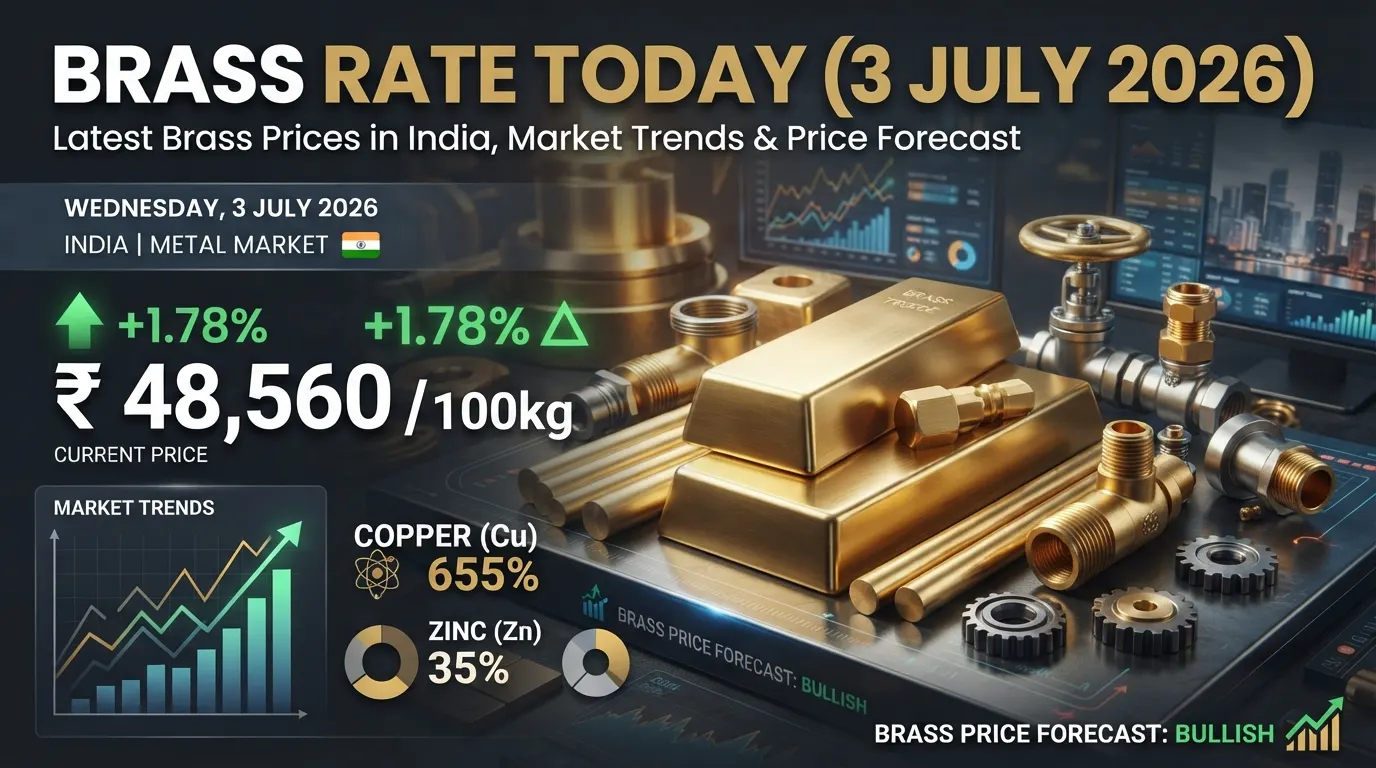
Check the latest brass rates in India for 3 July 2026. Know today's brass price, factors affecting brass rates, market trends, industrial demand and price outlook for buyers and traders.
We publish educational market explainers so readers can connect daily price movement with long-term investing concepts, common risks, and decision-making basics.
Published by Metal Stock Rates and reviewed under our editorial standards on Friday, July 3, 2026.
Brass Rate Today (3 July 2026): Latest Brass Prices, Market Trends & Forecast
Brass prices in India remained broadly stable on 3 July 2026, with demand from engineering, electrical, plumbing and decorative industries continuing to support the market. Although brass is not traded on commodity exchanges like gold or silver, its prices fluctuate regularly due to movements in copper and zinc prices, import costs, industrial demand and scrap availability.
Manufacturers, fabricators, exporters and scrap dealers closely monitor brass prices because even small changes in raw material costs can significantly affect production expenses. Buyers planning bulk purchases should also keep an eye on global metal markets before making procurement decisions.
Brass Rate Today in India
Physical brass prices vary across cities depending on purity, alloy composition, transportation costs and local demand. Premium-grade brass products generally command higher prices than recycled or mixed-alloy materials.
| Material | Approximate Market Range |
|---|---|
| Brass Scrap | ₹400 – ₹550 per kg |
| Industrial Brass Products | ₹750 – ₹1,200 per kg (depending on grade) |
*Prices vary by location, purity, quantity and supplier. These figures are indicative market ranges only.*
What is Brass?
Brass is a durable metal alloy primarily made from copper and zinc. By adjusting the percentage of these two metals, manufacturers can produce different grades of brass suitable for plumbing fittings, electrical components, hardware, musical instruments, automotive parts, decorative items and industrial machinery. Brass is valued for its corrosion resistance, attractive appearance and excellent machinability.
Why Brass Prices Change
- International copper price movements.
- Changes in zinc prices.
- Import duties and freight costs.
- Industrial and infrastructure demand.
- Availability of brass scrap for recycling.
- Currency fluctuations, especially the Indian Rupee against the US Dollar.
- Global manufacturing activity.
Industrial Demand Remains Strong
India continues to witness healthy demand for brass products from electrical equipment manufacturers, construction companies, plumbing solution providers, automobile component manufacturers and engineering industries. Growing infrastructure development and expansion in manufacturing have helped maintain steady consumption of brass throughout the year.
Jamnagar in Gujarat remains one of India's largest brass manufacturing hubs, supplying components to domestic and international markets. Demand from export-oriented manufacturers also plays an important role in supporting brass prices.
Brass Scrap Market Update
The brass scrap market remains active as recycling continues to reduce production costs and improve sustainability. Scrap dealers have reported stable buying interest from foundries and manufacturers looking for cost-effective raw materials. Regional prices vary depending on grade, cleanliness and metal composition.
Price Outlook for July 2026
Market experts expect brass prices to remain largely range-bound during July 2026 unless there are significant movements in copper or zinc prices. Rising industrial demand could provide support, while any decline in global base metal prices may limit further gains.
Businesses involved in manufacturing or bulk procurement should continue monitoring global commodity markets, exchange rates and domestic demand before placing large orders.
Tips Before Buying Brass
- Compare prices from multiple suppliers.
- Verify brass grade and purity.
- Request quality certificates for industrial purchases.
- Track copper and zinc market trends.
- Consider transportation costs for bulk orders.
- Purchase from trusted dealers with transparent pricing.
How Copper and Zinc Prices Influence Brass Rates
Brass is manufactured primarily by combining copper and zinc, making these two base metals the biggest price drivers for brass products. When copper prices increase due to supply shortages, mining disruptions or rising industrial demand, brass manufacturers often experience higher production costs. Similarly, fluctuations in zinc prices directly affect the overall cost of producing different brass grades.
During 2026, global copper markets have experienced periods of volatility because of geopolitical developments, transportation costs and changing demand from renewable energy and electric vehicle industries. Since copper represents a significant portion of brass, manufacturers closely monitor international copper exchanges before revising domestic brass prices. :contentReference[oaicite:0]{index=0}
For buyers, tracking copper and zinc market movements can provide valuable insights into future brass price trends. Businesses that depend heavily on brass components often secure inventory in advance when raw material prices appear likely to increase.
Top Industries That Consume Brass in India
India has become one of the world's leading manufacturers and exporters of brass components. Demand comes from a wide variety of industries where brass is valued for its strength, corrosion resistance and excellent electrical conductivity.
| Industry | Common Brass Applications |
|---|---|
| Electrical | Switches, connectors, terminals and sockets |
| Construction | Plumbing fittings, valves and sanitary hardware |
| Automobile | Radiators, fittings, bearings and precision parts |
| Engineering | Machined components and industrial equipment |
| Decorative Products | Home décor, statues, handles and furniture fittings |
Growth in infrastructure projects, real estate development and manufacturing activities has increased the consumption of brass products across India. Export demand also remains an important contributor to domestic production. Industry forecasts indicate that the Indian brass market is expected to continue expanding over the coming years as manufacturing and infrastructure investments increase. :contentReference[oaicite:1]{index=1}
Jamnagar – India's Brass Manufacturing Hub
Jamnagar, Gujarat, is widely recognized as India's Brass City. Thousands of small and medium-sized manufacturers operate in the region, producing brass rods, fittings, electrical components, precision parts and customized engineering products. These products are supplied across India and exported to Europe, North America, the Middle East and several Asian countries.
The city's well-developed supply chain, skilled workforce and access to recycled brass have helped establish Jamnagar as one of the world's leading brass manufacturing clusters. Changes in demand from this region often influence wholesale brass prices across India. :contentReference[oaicite:2]{index=2}
Domestic vs Imported Brass
Indian manufacturers use both domestically produced and imported raw materials. Imported brass and copper may become more expensive whenever freight charges, customs duties or exchange rates increase. A weaker Indian Rupee against the US Dollar generally raises import costs, which can eventually push domestic brass prices higher.
On the other hand, improved availability of recycled brass scrap within India can help manufacturers reduce production expenses and stabilize prices even when international markets remain volatile.
Is Brass a Good Investment?
Unlike gold or silver, brass is not commonly purchased as an investment asset. Instead, it is an industrial metal whose value is largely driven by manufacturing demand. Businesses involved in engineering, electrical equipment, construction and automobile production purchase brass primarily for operational use rather than wealth preservation.
However, traders dealing in non-ferrous metals often monitor brass prices because fluctuations in copper and zinc create opportunities for procurement planning and inventory management. Scrap dealers and recyclers also benefit from understanding market trends before buying or selling large quantities of brass.
Expert Market Outlook for the Second Half of 2026
Looking ahead, industry participants expect brass prices to remain relatively stable with moderate fluctuations throughout the second half of 2026. Infrastructure spending, export orders and manufacturing activity are expected to support demand, while any significant movement in copper or zinc prices could influence production costs.
Recent reports indicate that global brass demand continues to benefit from increasing investments in electrical equipment, renewable energy infrastructure and precision engineering. At the same time, changes in scrap availability and international logistics could create temporary price volatility in regional markets. :contentReference[oaicite:3]{index=3}
Frequently Asked Questions (FAQs)
What is brass mainly made of?
Brass is primarily an alloy of copper and zinc. Different proportions of these metals produce different grades of brass suitable for various industrial applications.
Why do brass prices change frequently?
Brass prices depend mainly on copper and zinc prices, industrial demand, transportation costs, currency exchange rates and the availability of brass scrap.
Which city is famous for brass manufacturing in India?
Jamnagar in Gujarat is considered India's largest brass manufacturing hub and exports brass products worldwide.
Can brass prices increase in the coming months?
Future price movements will depend on raw material costs, industrial demand, global economic conditions and supply chain developments. Moderate fluctuations are generally expected rather than extreme price swings.
Conclusion
As of 3 July 2026, the Indian brass market continues to display stable fundamentals supported by consistent industrial demand and balanced raw material costs. While day-to-day price changes are usually moderate, movements in copper and zinc markets remain the biggest drivers of future brass prices. Buyers, manufacturers and scrap dealers should stay informed about market developments to make better purchasing and investment decisions.
Topics Covered
Prepares educational explainers, updates evergreen market guides, and reviews site content for clarity, consistency, and reader usefulness.
For corrections, feedback, or source-quality concerns, visit our contact page or review our editorial policy.