Gold & Silver Prices Crash on July 1, 2026: Why MCX Rates Fell Sharply and What Investors Should Do
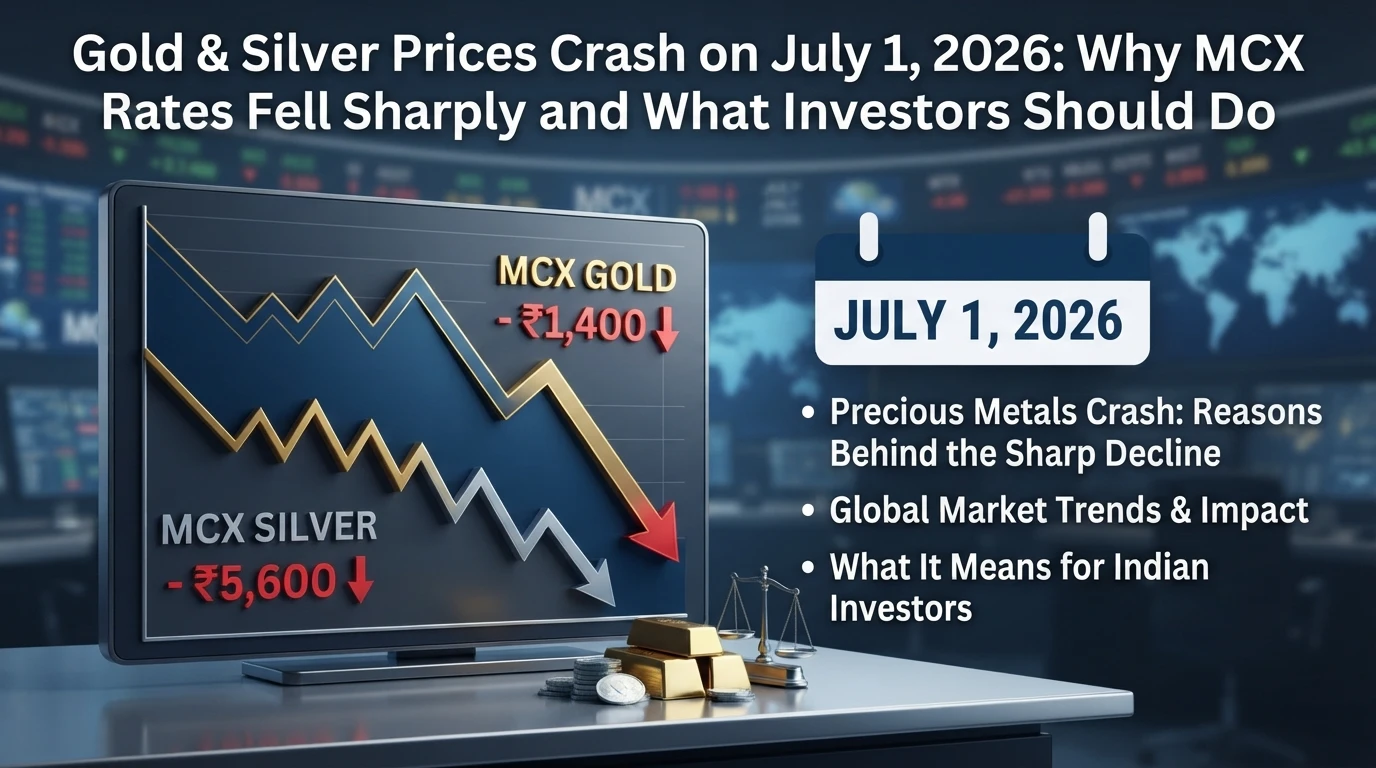
Gold and silver prices witnessed a sharp decline on July 1, 2026, with MCX Gold falling by over ₹1,400 and Silver dropping more than ₹5,600. Discover the reasons behind today's precious metals crash, global market trends, and what it means for investors in India.
We publish educational market explainers so readers can connect daily price movement with long-term investing concepts, common risks, and decision-making basics.
Published by Metal Stock Rates and reviewed under our editorial standards on Wednesday, July 1, 2026.
- MCX Gold & Silver Performance Today
- Global Precious Metals Under Pressure
- Major Reasons Behind Today's Fall
- US Economic Data Changed Market Sentiment
- Why Interest Rates Matter for Gold
- Geopolitical Developments Remain Important
Gold & Silver Prices Crash on July 1, 2026: Why MCX Rates Fell Sharply and What Investors Should Do
Gold and silver prices started July with a sharp correction in both domestic and international markets. On the Multi Commodity Exchange (MCX), gold futures declined by more than ₹1,400 per 10 grams during early trading, while silver futures plunged by over ₹5,600 per kilogram. The sudden fall surprised many investors who had witnessed precious metals trading near record highs just a few weeks earlier.
The decline was primarily driven by stronger-than-expected economic data from the United States, renewed expectations of tighter monetary policy by the US Federal Reserve, and a stronger US Dollar. These factors collectively reduced the appeal of non-yielding assets such as gold and silver, resulting in heavy profit booking across global commodity markets.
MCX Gold & Silver Performance Today
| Commodity | Intraday Low | Change | Market |
|---|---|---|---|
| MCX Gold (10g) | ₹1,41,115 | -₹1,416 | MCX Futures |
| MCX Silver (1 Kg) | ₹2,22,901 | -₹5,662 | MCX Futures |
Global Precious Metals Under Pressure
International bullion markets also witnessed considerable weakness. Spot gold remained below the psychologically important $4,000 per ounce level and traded near its lowest point in approximately eight months. Silver also extended its decline, falling close to 2% and touching around $57.6 per ounce, marking its weakest level in nearly seven months.
Global investors shifted their attention towards economic indicators rather than safe-haven assets. As expectations for higher interest rates strengthened, institutional investors reduced exposure to precious metals and moved funds toward interest-bearing investments.
Major Reasons Behind Today's Fall
| Factor | Impact on Gold & Silver |
|---|---|
| Strong US Employment Data | Reduced demand for safe-haven assets. |
| Higher Inflation | Increased probability of future Fed rate hikes. |
| Stronger US Dollar | Made precious metals more expensive for overseas buyers. |
| Profit Booking | Investors locked in gains after previous rallies. |
| Improved Risk Sentiment | Lower demand for defensive investments. |
US Economic Data Changed Market Sentiment
The latest Job Openings and Labor Turnover Survey (JOLTS) showed that job vacancies increased to a two-year high, highlighting continued strength in the US labour market. Strong employment numbers generally indicate healthy economic activity and often encourage central banks to maintain or increase interest rates to control inflation.
Market participants are also closely watching upcoming US Non-Farm Payrolls data. If employment growth remains robust, expectations for another Federal Reserve interest rate increase could strengthen further, creating additional pressure on gold and silver prices.
Why Interest Rates Matter for Gold
Gold does not generate regular income such as dividends or interest. When central banks raise interest rates, government bonds and fixed-income investments become more attractive, reducing investor interest in gold. Higher rates also strengthen the US Dollar, which often moves inversely to precious metal prices.
Silver behaves similarly but also has significant industrial demand. During periods of economic uncertainty, silver can experience even larger price swings than gold because it is influenced by both investment demand and industrial consumption.
Geopolitical Developments Remain Important
Markets continue to monitor developments surrounding discussions involving the United States and Iran. Any meaningful progress toward reducing geopolitical tensions could lower demand for traditional safe-haven assets like gold. However, unexpected developments could quickly reverse market sentiment and trigger renewed buying interest.
Should Investors Be Worried?
Short-term price corrections are a normal part of commodity market cycles. Although today's decline appears significant, long-term investors should evaluate broader economic trends instead of reacting solely to daily price movements.
Historically, gold has served as a portfolio diversifier, inflation hedge, and store of value during periods of financial uncertainty. Investors with a long investment horizon may consider such corrections as opportunities to accumulate gradually rather than making large one-time purchases.
Investment Strategies During Price Corrections
| Investor Type | Suggested Strategy |
|---|---|
| Long-Term Investors | Continue gradual accumulation using SIP or staggered purchases. |
| Short-Term Traders | Watch support and resistance levels before initiating fresh positions. |
| Jewellery Buyers | Compare retail prices and making charges before purchasing. |
| Portfolio Investors | Maintain diversified exposure instead of concentrating only in precious metals. |
What Could Influence Prices Next?
- US Non-Farm Payrolls report
- Federal Reserve policy announcements
- US inflation data
- Movement in the US Dollar Index
- Global geopolitical developments
- Physical demand from India and China
Conclusion
The sharp decline in gold and silver prices on July 1, 2026, reflects changing global economic expectations rather than a structural weakness in precious metals. Strong US economic indicators, expectations of future Federal Reserve rate hikes, and a stronger US Dollar collectively triggered selling pressure across bullion markets.
For investors, today's correction highlights the importance of maintaining a long-term perspective and avoiding emotional investment decisions based on short-term market volatility. While prices may remain volatile over the coming weeks, future movements will largely depend on upcoming economic data, central bank decisions, and geopolitical developments. Maintaining diversification and disciplined investing remains the most effective strategy during periods of market uncertainty.
Topics Covered
Prepares educational explainers, updates evergreen market guides, and reviews site content for clarity, consistency, and reader usefulness.
For corrections, feedback, or source-quality concerns, visit our contact page or review our editorial policy.