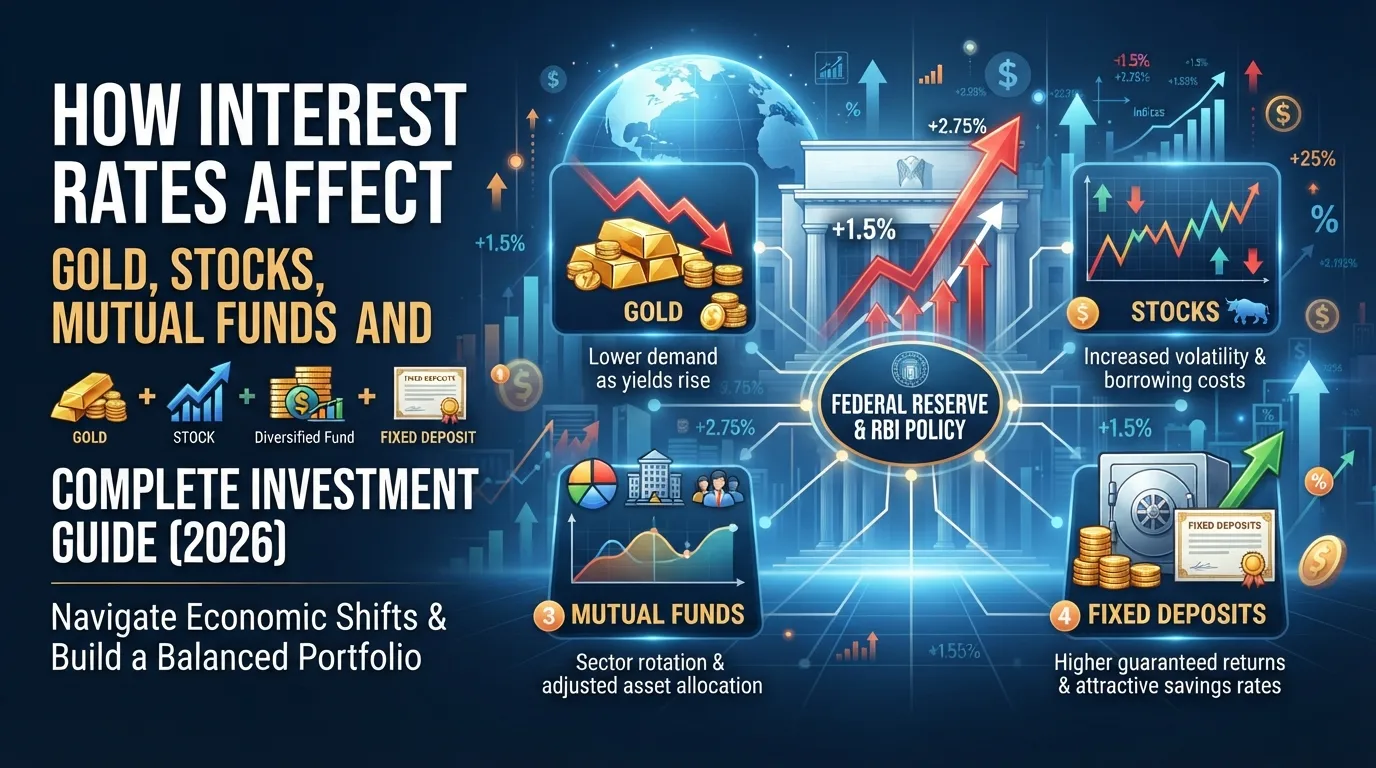
Asset Allocation Strategy 2026: How to Build a Balanced Investment Portfolio in India

Learn how to build a balanced investment portfolio in 2026 using asset allocation. Understand the ideal mix of stocks, gold, debt, mutual funds and cash based on your financial goals and risk profile.
We publish educational market explainers so readers can connect daily price movement with long-term investing concepts, common risks, and decision-making basics.
Published by Metal Stock Rates and reviewed under our editorial standards on Friday, July 3, 2026.
Asset Allocation Strategy 2026: How to Build a Balanced Investment Portfolio in India
Many investors spend countless hours searching for the next multibagger stock or trying to predict the future direction of gold prices. While selecting quality investments is important, one factor has a much greater influence on long-term wealth creation—asset allocation.
Asset allocation is the process of dividing your investments across different asset classes such as equities, gold, debt instruments, mutual funds, and cash. A well-balanced portfolio helps reduce risk while providing opportunities for consistent long-term growth.
Rather than relying on a single investment, diversification allows your portfolio to perform more steadily during different market conditions. In 2026, when global markets continue to experience changing interest rates, geopolitical uncertainty and inflation concerns, having the right asset allocation strategy has become more important than ever.
What is Asset Allocation?
Asset allocation refers to distributing your money among multiple investment categories instead of putting all your capital into one asset. Every asset class behaves differently during economic cycles. When one investment underperforms, another may help stabilize the portfolio.
The objective isn't to eliminate risk completely but to manage it intelligently while improving the chances of achieving your financial goals.
Major Asset Classes
| Asset Class | Risk | Potential Return | Suitable For |
|---|---|---|---|
| Stocks | High | High | Long-term wealth creation |
| Mutual Funds | Moderate | Moderate to High | Most investors |
| Gold | Low to Moderate | Moderate | Portfolio protection |
| Debt Instruments | Low | Stable | Income & capital preservation |
| Cash & Liquid Funds | Very Low | Low | Emergency needs |
Why Diversification Matters
Markets rarely move in the same direction simultaneously. During periods when stock markets decline, investors often move toward safer assets such as gold or debt investments. Likewise, when economic growth improves, equities generally outperform traditional fixed-income investments.
Holding different assets reduces portfolio volatility and can improve long-term consistency.
Sample Portfolio Allocation
| Investor Type | Stocks | Gold | Debt | Cash |
|---|---|---|---|---|
| Conservative | 35% | 20% | 35% | 10% |
| Balanced | 55% | 15% | 20% | 10% |
| Aggressive | 75% | 10% | 10% | 5% |
Factors That Influence Asset Allocation
- Your age.
- Investment horizon.
- Monthly income.
- Emergency fund availability.
- Risk tolerance.
- Financial goals.
- Existing investments.
Common Mistakes Investors Make
- Investing all money in one stock.
- Ignoring portfolio rebalancing.
- Buying assets based on social media hype.
- Following market trends without research.
- Not maintaining an emergency fund.
- Overlooking tax implications.
- Reacting emotionally during market corrections.
How Often Should You Rebalance?
Portfolio rebalancing means restoring your investments to their original allocation whenever one asset grows significantly larger than others. Many investors review their portfolios every six to twelve months or after major market movements.
Rebalancing helps maintain your intended level of risk and prevents one investment from dominating your portfolio.
Who Needs Asset Allocation?
Whether you are a beginner investing ₹5,000 per month or an experienced investor managing a large portfolio, asset allocation plays a crucial role in long-term financial planning. Every investor has unique goals, and no single allocation works for everyone.
Why Asset Allocation Is More Important Than Stock Selection
Many new investors spend most of their time searching for stocks that can deliver exceptional returns. While choosing quality investments is important, financial studies have consistently shown that the way your portfolio is allocated among different asset classes has a much greater impact on long-term performance than selecting individual securities.
Different asset classes perform differently throughout economic cycles. During periods of rapid economic growth, equities generally outperform other investments. When inflation rises or geopolitical uncertainty increases, investors often move towards safer assets such as gold or fixed-income securities. Because no single asset performs best every year, diversification through asset allocation helps smooth overall portfolio returns.
Instead of attempting to predict which investment will generate the highest return next year, investors should focus on building a portfolio that can perform reasonably well under different market conditions. This approach reduces emotional decision-making and encourages disciplined investing.
Understanding Your Risk Profile
Before deciding how to allocate investments, every investor should evaluate their risk tolerance. Risk tolerance refers to your ability and willingness to handle temporary declines in the value of your investments without making impulsive decisions.
Generally, younger investors with stable income and long investment horizons can afford to allocate a larger percentage of their portfolio to equities. On the other hand, individuals approaching retirement may prefer a greater allocation to debt instruments and other relatively stable assets that aim to preserve capital while generating regular income.
Your financial responsibilities also play an important role. Someone supporting a family, paying a home loan or saving for children's education may require a more balanced portfolio compared to someone with fewer financial obligations.
Sample Asset Allocation Based on Age
| Age Group | Equity | Gold | Debt | Cash |
|---|---|---|---|---|
| 20–30 Years | 70–80% | 10% | 10–15% | 5% |
| 30–45 Years | 60–70% | 10–15% | 15–25% | 5% |
| 45–60 Years | 45–55% | 15% | 25–35% | 10% |
| Above 60 Years | 20–35% | 15% | 40–50% | 15% |
These allocations are illustrative and should be adjusted based on personal financial goals, income stability, investment horizon and risk tolerance.
How Inflation Affects Your Portfolio
Inflation gradually reduces the purchasing power of money over time. If your investments generate returns below the inflation rate, your real wealth may decline even though your portfolio value appears to increase.
Growth-oriented assets such as equities have historically provided returns that outpace inflation over long periods, while gold has often acted as a hedge during times of high inflation and economic uncertainty. Debt investments generally provide stable income but may deliver lower inflation-adjusted returns over extended periods.
A diversified asset allocation strategy helps investors maintain purchasing power while reducing the impact of inflation on long-term financial goals.
Benefits of Systematic Investing
Rather than investing a large amount at one time, many investors prefer investing regularly through Systematic Investment Plans (SIPs). Investing fixed amounts every month allows investors to purchase more units when markets decline and fewer units when markets rise, reducing the impact of market volatility.
Combining SIPs with a diversified asset allocation strategy can help build wealth steadily while reducing emotional reactions to short-term market fluctuations.
When Should You Change Your Asset Allocation?
Asset allocation should not remain unchanged throughout your lifetime. Major life events often require investors to review and adjust their portfolios. These events may include marriage, purchasing a home, starting a business, planning for children's education, retirement or receiving a significant inheritance.
Changes in interest rates, inflation expectations and personal income can also influence how your investments should be allocated. Reviewing your portfolio at least once every year helps ensure that it continues to align with your financial objectives.
Common Myths About Asset Allocation
| Myth | Reality |
|---|---|
| Only wealthy people need diversification. | Diversification benefits investors with portfolios of every size. |
| Young investors should only buy stocks. | Even younger investors benefit from holding some defensive assets. |
| Gold guarantees profits. | Gold helps diversify risk but its prices also fluctuate. |
| Asset allocation eliminates investment risk. | It reduces portfolio risk but cannot eliminate market uncertainty. |
Key Takeaways
- Asset allocation forms the foundation of successful long-term investing.
- Diversifying across equities, gold, debt and cash helps reduce portfolio volatility.
- Your investment mix should match your age, financial goals and risk tolerance.
- Review and rebalance your portfolio at least once every year.
- Stay focused on long-term financial objectives instead of reacting to short-term market movements.
- Maintain an emergency fund before increasing exposure to higher-risk investments.
Frequently Asked Questions
What is the ideal asset allocation for beginners?
There is no universal allocation for every investor. Beginners should choose a diversified portfolio based on their age, income, investment horizon and ability to tolerate market fluctuations.
How often should I rebalance my portfolio?
Most financial planners recommend reviewing your portfolio every six to twelve months or whenever one asset class significantly exceeds its intended allocation.
Is gold necessary in an investment portfolio?
Gold can provide diversification and may help reduce overall portfolio volatility during periods of market uncertainty, although the appropriate allocation depends on individual financial goals.
Can I change my asset allocation later?
Yes. Your portfolio should evolve as your financial goals, income, responsibilities and risk tolerance change over time.
Final Thoughts
Successful investing isn't about finding the perfect stock every time. It's about building a diversified portfolio that can withstand changing market conditions while steadily working toward your financial goals. A disciplined asset allocation strategy can help reduce unnecessary risk, improve long-term returns and provide greater confidence during periods of market volatility.
Topics Covered
Prepares educational explainers, updates evergreen market guides, and reviews site content for clarity, consistency, and reader usefulness.
For corrections, feedback, or source-quality concerns, visit our contact page or review our editorial policy.