Vedanta Aluminium Share Price Target 2026: Can the Stock Rally 22% on Lower Costs and Strong Aluminium Demand?
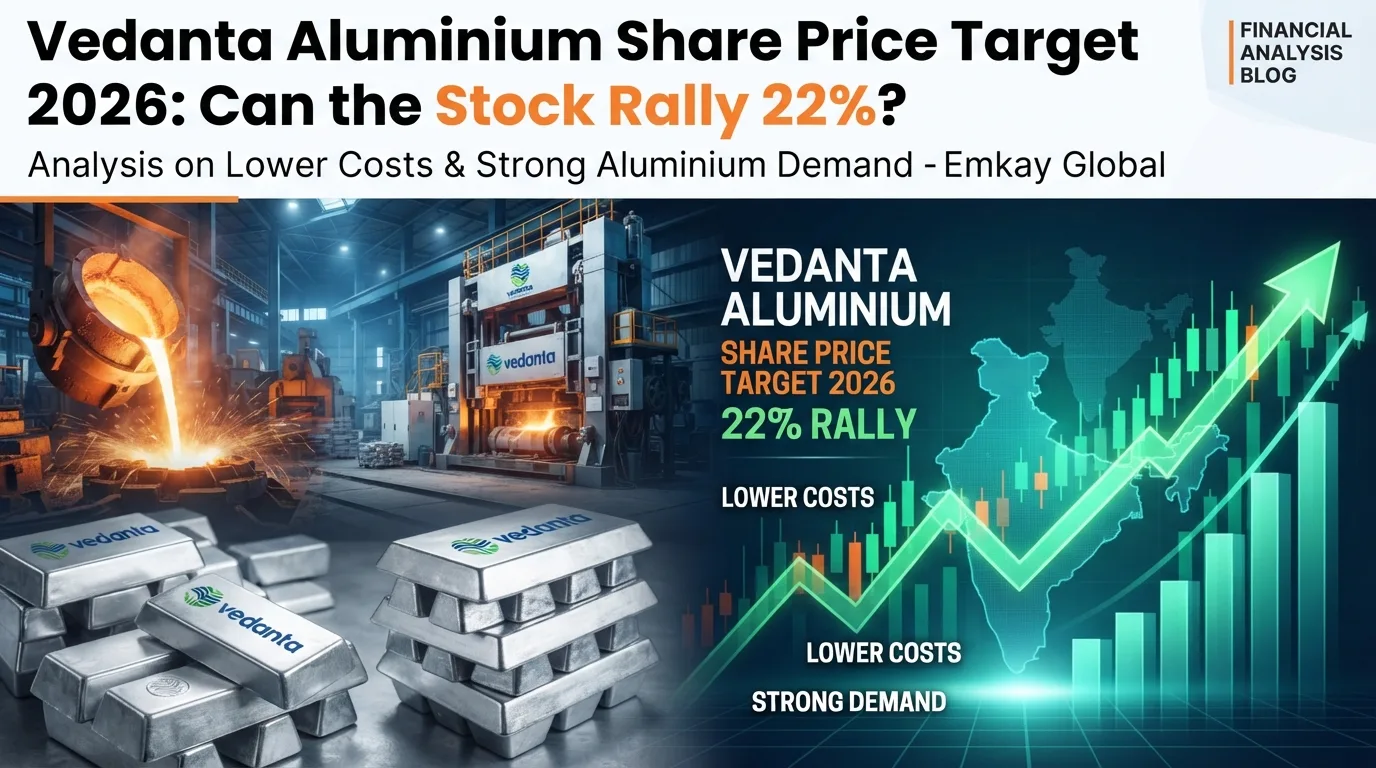
Brokerage firm Emkay Global believes Vedanta Aluminium could deliver nearly 22% upside as backward integration, lower production costs, and favourable aluminium market fundamentals strengthen earnings outlook. Here's a detailed analysis.
We publish educational market explainers so readers can connect daily price movement with long-term investing concepts, common risks, and decision-making basics.
Published by Metal Stock Rates and reviewed under our editorial standards on Thursday, July 2, 2026.
- Vedanta Aluminium Share Price Target 2026: Is a New Rally on the Cards?
- Why Analysts Remain Positive
- Global Aluminium Market Remains Supportive
- Lower Costs Could Improve Profitability
- Recent Share Price Performance
- What Could Drive Future Growth?
Vedanta Aluminium Share Price Target 2026: Is a New Rally on the Cards?
Vedanta Aluminium has once again become one of the most discussed metal stocks after a leading domestic brokerage projected a potential upside of nearly 22% over the coming years. The optimism is driven by expectations of lower production costs, stronger free cash flow generation, and sustained global demand for aluminium.
Although the stock has witnessed significant volatility in recent weeks, analysts believe the market may not yet be fully factoring in the company's long-term earnings potential. Investors are now closely monitoring the company's integration strategy, expansion plans, and global aluminium market trends before making fresh investment decisions.
| Key Metric | Details |
|---|---|
| Current Market Price | ₹452 (Previous Close) |
| Brokerage Target Price | ₹550 |
| Potential Upside | Around 22% |
| Recommendation | Buy (Brokerage View) |
| Sector | Metals & Mining |
Why Analysts Remain Positive
One of the biggest reasons behind the positive outlook is Vedanta Aluminium's ongoing backward integration strategy. Instead of depending heavily on third-party suppliers, the company is steadily increasing control over critical raw materials and energy resources. This includes expanding access to bauxite mines, alumina refining capacity, coal assets, and captive power generation.
Such integration generally helps large metal producers reduce input costs, improve operational efficiency, and protect margins during periods of commodity price volatility. Lower production costs also make companies more competitive globally, especially during weaker commodity cycles.
If the company successfully executes these projects over the next few years, it could significantly strengthen profitability and cash generation, making the valuation more attractive for long-term investors.
Global Aluminium Market Remains Supportive
The long-term outlook for aluminium continues to remain encouraging. Demand is expected to grow across electric vehicles, renewable energy infrastructure, construction, packaging, aerospace, and power transmission projects. Aluminium's lightweight nature and recyclability make it one of the preferred industrial metals for the global energy transition.
While several countries are adding fresh aluminium production capacity, analysts believe supply growth may remain slower than demand because of environmental regulations, project delays, and production constraints in major producing nations. This could keep the global aluminium market relatively balanced over the next few years.
| Growth Driver | Impact on Aluminium Demand |
|---|---|
| Electric Vehicles | Higher consumption of lightweight aluminium components |
| Renewable Energy | Growing requirement for transmission infrastructure |
| Construction | Increasing use in modern buildings and infrastructure |
| Packaging Industry | Steady long-term demand growth |
| Aerospace | Continued demand for lightweight materials |
Lower Costs Could Improve Profitability
Cost efficiency is often one of the most important drivers of earnings for metal companies. Every reduction in production expenses directly improves operating margins, especially when commodity prices remain stable.
Vedanta Aluminium's integrated business model aims to reduce dependence on expensive external suppliers while ensuring stable access to key raw materials. Better cost control can improve EBITDA margins, increase operating leverage, and generate stronger free cash flow over the long term.
Improved cash generation also provides greater financial flexibility for debt reduction, expansion projects, shareholder returns, and future investments.
Recent Share Price Performance
Despite the positive long-term outlook, the stock has experienced short-term volatility. Like many commodity companies, Vedanta Aluminium remains sensitive to fluctuations in global metal prices, investor sentiment, and macroeconomic developments.
| Performance Indicator | Value |
|---|---|
| Previous Close | ₹452 |
| 52-Week High | ₹538 |
| 52-Week Low | ₹421.65 |
| Recent Two-Week Movement | Approximately 13.8% decline |
Short-term price corrections are common in cyclical sectors like metals. Investors often evaluate these movements alongside long-term earnings expectations rather than relying solely on recent market fluctuations.
What Could Drive Future Growth?
- Expansion of captive bauxite and alumina capacity.
- Improved operating efficiency through backward integration.
- Stable global aluminium prices.
- Growing demand from electric vehicles and renewable energy projects.
- Higher free cash flow generation.
- Potential reduction in financing costs through stronger cash generation.
Risks Investors Should Consider
While analysts remain optimistic, investing in metal companies always involves certain risks. Commodity businesses are influenced by international prices, geopolitical developments, government policies, exchange rates, and energy costs.
| Risk Factor | Possible Impact |
|---|---|
| Weak Aluminium Prices | Pressure on revenue and profitability |
| Higher Energy Costs | Increase in production expenses |
| Project Delays | Slower realization of expected cost savings |
| Regulatory Changes | Impact on mining, environmental approvals, or operations |
| Global Economic Slowdown | Lower industrial demand for aluminium |
Should Long-Term Investors Watch the Stock?
Investors looking at the metals sector often focus on companies capable of maintaining profitability throughout commodity cycles. Integrated operations, cost leadership, and improving operational efficiency generally provide a competitive advantage during periods of market volatility.
Vedanta Aluminium's long-term investment case depends largely on successful execution of its expansion strategy, disciplined capital allocation, and continued growth in global aluminium demand. If these factors remain supportive, the company could strengthen its earnings profile over the coming years.
However, investors should remember that commodity stocks can remain volatile in the short term. Investment decisions should always be based on individual financial goals, risk tolerance, and proper research rather than brokerage targets alone.
Conclusion
Vedanta Aluminium continues to attract investor attention as analysts highlight its improving cost structure, expanding backward integration, and favourable long-term aluminium demand outlook. While short-term market fluctuations may continue, the company's operational improvements could strengthen earnings and cash flows if executed successfully.
For investors seeking exposure to India's metals sector, Vedanta Aluminium remains a stock worth monitoring. Nevertheless, it is essential to evaluate both opportunities and risks before making any investment decision, as commodity markets can change rapidly based on global economic conditions.
Topics Covered
Prepares educational explainers, updates evergreen market guides, and reviews site content for clarity, consistency, and reader usefulness.
For corrections, feedback, or source-quality concerns, visit our contact page or review our editorial policy.