Platinum Price Trends and Investment Opportunities
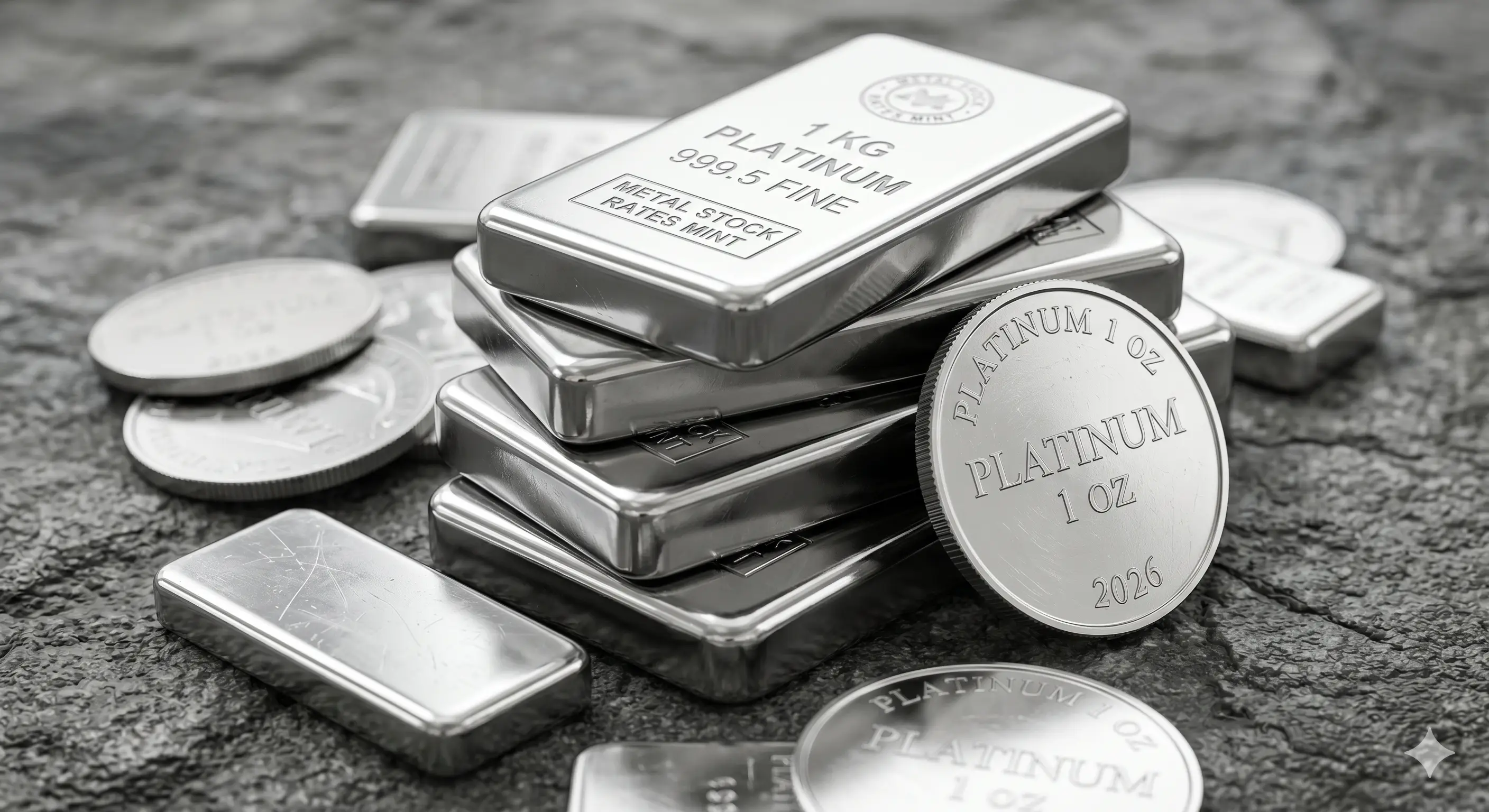
Explore platinum price trends and investment opportunities. Learn about market dynamics, demand drivers, and strategies for platinum investment in 2026.
We publish educational market explainers so readers can connect daily price movement with long-term investing concepts, common risks, and decision-making basics.
Published by Metal Stock Rates and reviewed under our editorial standards on Thursday, February 5, 2026.
- Understanding Platinum's Market Position
- Key Demand Drivers for Platinum
- Automotive Industry
- Jewelry and Investment
- Industrial Applications
- Supply Dynamics and Challenges
Platinum Price Trends and Investment Opportunities in 2026
Platinum, the rarest and most valuable precious metal, has long been associated with luxury and industrial applications. In 2026, as the world transitions toward sustainable technologies, platinum's role in automotive and industrial sectors positions it for potential growth. This analysis explores current price trends, market dynamics, and investment opportunities in the platinum market.
Understanding Platinum's Market Position
Platinum is significantly rarer than gold, with annual production of only about 200 tons compared to gold's 3,000 tons. This scarcity, combined with its unique properties, makes platinum a high-value investment. The metal's price has historically been more volatile than gold, often trading at 2-3 times the gold price per ounce.
In 2026, platinum prices hover around $1,200-1,400 per ounce, reflecting a recovery from the pandemic lows. The market has shown resilience despite economic challenges, supported by strong industrial demand.
Key Demand Drivers for Platinum
Platinum's demand comes primarily from industrial and investment sectors, creating a diversified demand profile.
Automotive Industry
The automotive sector accounts for over 40% of platinum demand. Platinum is essential in catalytic converters that reduce vehicle emissions. With stricter emission standards worldwide and the growth of electric vehicles requiring platinum-based fuel cells, this sector remains crucial.
- Diesel vehicle catalysts: Primary use
- Gasoline vehicle converters: Growing application
- Hydrogen fuel cells: Emerging technology
- Electric vehicle components: Future potential
Jewelry and Investment
Platinum jewelry represents about 30% of demand. Its durability and hypoallergenic properties make it popular for high-end jewelry. Investment demand comes from coins, bars, and ETFs.
Industrial Applications
Platinum's corrosion resistance and high melting point make it valuable in chemical processing, electronics, and medical equipment. The glass industry uses platinum for manufacturing processes.
- Chemical catalysts: Petroleum refining
- Electronics: Hard disk drives
- Medical: Pacemakers and dental equipment
- Glass manufacturing: Crucibles and electrodes
Supply Dynamics and Challenges
Platinum supply is concentrated in a few countries, creating potential vulnerabilities.
Major Producers
South Africa produces over 70% of the world's platinum, followed by Russia and Zimbabwe. Mining operations face challenges including labor disputes, infrastructure issues, and environmental regulations.
Recycling and Secondary Supply
Recycling accounts for about 25% of platinum supply. Automotive catalysts and jewelry provide the main sources of recycled platinum. As the vehicle fleet ages, recycling could increase supply.
Platinum Price Trends Analysis
Platinum prices have shown distinct patterns over the years, influenced by various market factors.
Historical Performance
Platinum reached all-time highs of over $2,000 per ounce in 2008 but fell below $800 during the 2010s due to reduced automotive demand. The metal has shown strong recovery since 2020, driven by emission standards and industrial demand.
Current Market Conditions
In 2026, platinum trades at a premium to gold, reflecting its industrial importance. The platinum-gold ratio, a key indicator, currently stands at about 1.2, suggesting relative strength.
Price Forecast for 2026
Analysts predict moderate growth for platinum prices in 2026. Key projections include:
- Q1-Q2: $1,200-1,500 per ounce range
- Q3-Q4: Potential breakout to $1,600 if demand accelerates
- Long-term: $2,000+ per ounce by 2030
Investment Opportunities in Platinum
Platinum offers various investment avenues for different investor preferences.
Physical Platinum
Bars and coins provide direct ownership. Due to high value, fractional ownership through dealers is common. Storage and insurance are important considerations.
Platinum ETFs
ETFs offer exposure to platinum prices without physical ownership. These provide liquidity and are suitable for retail investors.
Mining Company Stocks
Investing in platinum mining companies provides leveraged exposure. Major players include Anglo American Platinum and Impala Platinum. However, this involves company-specific risks.
Futures Contracts
For sophisticated investors, platinum futures on commodities exchanges offer hedging and speculation opportunities.
Risk Factors and Challenges
Platinum investment carries specific risks that investors should understand.
- Supply Concentration: Heavy reliance on South African mines
- Industrial Demand Dependency: Vulnerable to automotive sector changes
- High Volatility: Prices can swing dramatically
- Geopolitical Risks: Mining operations in politically unstable regions
- Competition from Palladium: Alternative metals in automotive applications
Technical Analysis Insights
Technical indicators help identify potential price movements:
- Key support: $1,100-1,200 per ounce
- Resistance levels: $1,500-1,600 per ounce
- Moving averages: 200-day MA at $1,300
- Momentum: RSI indicating oversold conditions
Platinum Investment Strategies
Effective strategies for platinum investment include:
- Long-term holding for industrial demand growth
- Diversification with other precious metals
- Sector-specific investing (automotive focus)
- Geographic diversification in mining exposure
- Regular portfolio rebalancing
Future Catalysts and Trends
Several trends could drive platinum demand in the coming years:
- Stricter emission regulations globally
- Growth in fuel cell technology
- Increasing electric vehicle adoption
- Rising demand for sustainable technologies
- Growth in emerging markets
Tax and Regulatory Considerations
Platinum investments have specific tax implications:
- Long-term capital gains tax on profits
- Indexation benefits for inflation adjustment
- ETFs may have different tax treatment
- Regulatory compliance for physical holdings
In conclusion, platinum presents unique investment opportunities in 2026, driven by its industrial importance and scarcity. While the metal carries higher risks than gold, its potential for growth in automotive and technology sectors makes it attractive for diversified portfolios. Investors should approach platinum with a long-term perspective, focusing on fundamental demand drivers rather than short-term price fluctuations. As the world moves toward sustainable technologies, platinum's role could become increasingly important, potentially leading to significant price appreciation. Consider your risk tolerance, investment goals, and consult financial advisors before investing in this premium precious metal.
Topics Covered
Prepares educational explainers, updates evergreen market guides, and reviews site content for clarity, consistency, and reader usefulness.
For corrections, feedback, or source-quality concerns, visit our contact page or review our editorial policy.