Palladium Price Forecast and Market Drivers
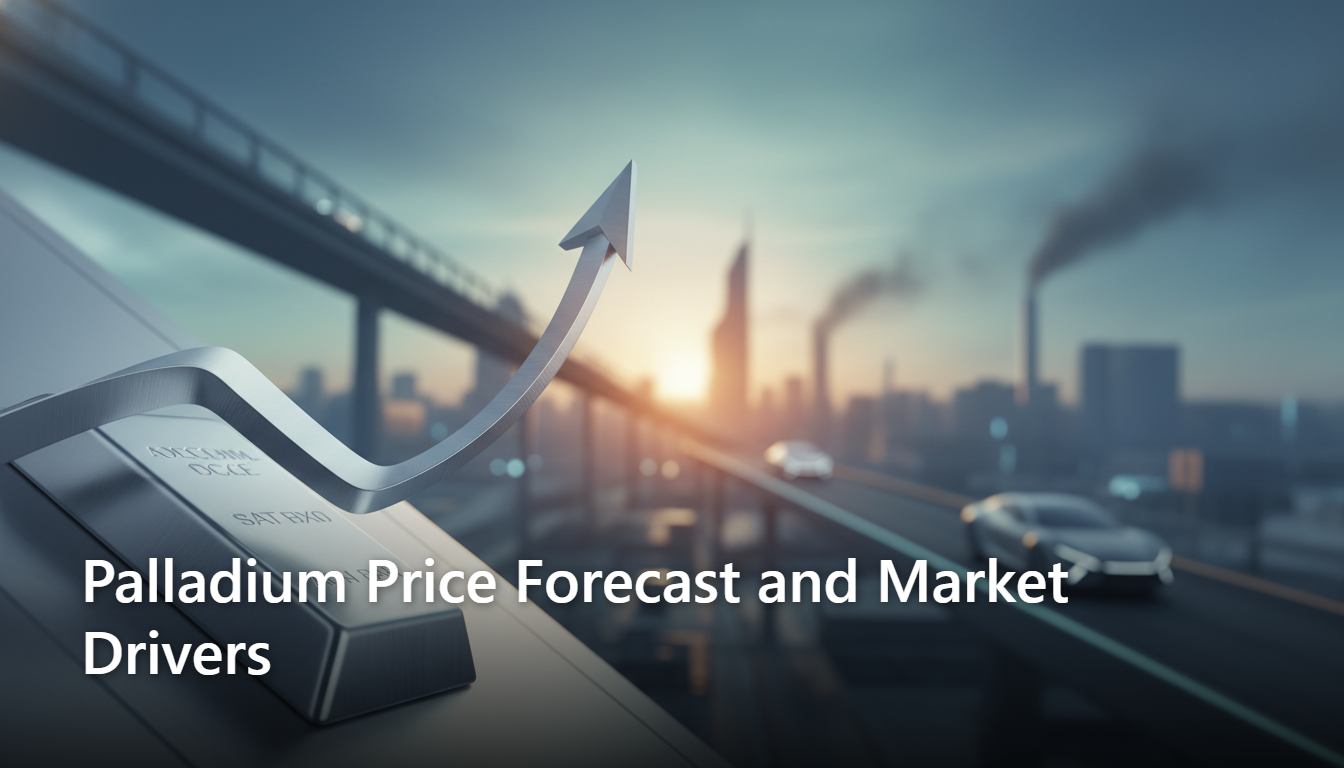
In-depth analysis of palladium price forecasts, key market drivers, supply-demand dynamics, and investment implications for 2026 and beyond.
We publish educational market explainers so readers can connect daily price movement with long-term investing concepts, common risks, and decision-making basics.
Published by Metal Stock Rates and reviewed under our editorial standards on Saturday, March 14, 2026.
- Understanding Palladium's Unique Position
- Key Properties and Applications
- Current Market Overview
- Price Performance
- Market Capitalization
- Supply-Side Dynamics
Palladium Price Forecast and Market Drivers: A Comprehensive Analysis
Palladium, the lesser-known precious metal that powers automotive catalytic converters, has emerged as one of the most dynamic commodities in recent years. With prices reaching record highs and significant volatility, understanding palladium's market dynamics is crucial for investors and industry stakeholders. This detailed analysis explores current price trends, key market drivers, supply-demand fundamentals, and future price forecasts for this critical industrial metal.
Understanding Palladium's Unique Position
Palladium is a rare precious metal in the platinum group, known for its exceptional catalytic properties. Unlike gold or silver, palladium's value is primarily derived from industrial demand rather than investment or jewelry. This industrial focus creates a different price dynamic, with automotive applications accounting for approximately 80% of total demand.
Key Properties and Applications
Palladium's resistance to corrosion and high catalytic efficiency make it indispensable in automotive emission control systems. It's also used in electronics, dentistry, jewelry, and chemical processes. The metal's scarcity and specialized applications contribute to its premium pricing.
Current Market Overview
As of early 2026, palladium prices have shown remarkable resilience despite global economic challenges.
Price Performance
Palladium reached historic highs above $3,000 per ounce in 2021-2022, though prices have moderated to around $1,500-$2,000 per ounce in recent months. The metal continues to trade at a significant premium to platinum and other precious metals.
Market Capitalization
The palladium market represents a $25-30 billion industry annually, with trading volumes concentrated in futures markets and ETF products. The metal's liquidity has improved significantly with the introduction of investment products.
Supply-Side Dynamics
Palladium supply is highly concentrated and vulnerable to various disruptions.
Primary Production
Russia and South Africa dominate palladium production, accounting for over 80% of global supply. Russia's Norilsk Nickel and South Africa's Anglo American Platinum and Impala Platinum are the largest producers. This concentration creates geopolitical risks.
Secondary Supply
Recycling from automotive catalysts and electronic waste provides significant secondary supply. As the installed base of palladium-containing vehicles grows, recycling volumes are expected to increase, potentially easing supply constraints.
Supply Challenges
Mining disruptions, labor disputes, and regulatory changes in major producing countries can significantly impact supply. The industry's heavy reliance on a few large mines makes it vulnerable to operational issues.
Demand-Side Drivers
Palladium demand is closely tied to automotive and industrial sectors.
Automotive Demand
The automotive sector consumes about 75-80% of palladium, primarily for gasoline vehicle catalytic converters. Diesel vehicles and emerging technologies like hybrid systems also contribute to demand. Global vehicle production and emission standards directly influence palladium consumption.
Industrial and Other Applications
Electronics, dentistry, and chemical industries account for the remaining demand. While smaller in volume, these sectors provide diversification and stability to overall demand.
Investment Demand
Growing investor interest has created a new demand stream. ETFs and investment products now account for 5-10% of total demand, adding price volatility but also liquidity.
Key Market Drivers
Several macroeconomic and industry-specific factors influence palladium prices.
Automotive Industry Trends
Global vehicle sales, emission regulations, and shifts toward electric vehicles significantly impact palladium demand. Stricter emission standards increase palladium requirements per vehicle.
Geopolitical Factors
Tensions involving Russia and South Africa can disrupt supply chains. Trade policies and sanctions may affect export volumes and pricing.
Economic Indicators
Industrial production, manufacturing activity, and economic growth influence palladium demand. The metal often serves as an economic indicator due to its industrial focus.
Currency and Commodity Markets
Palladium prices correlate with industrial metals and are influenced by USD strength. Weak dollar environments typically support higher palladium prices.
Price Forecast Analysis
Forecasting palladium prices requires consideration of multiple scenarios.
Short-term Outlook (2026)
For 2026, palladium prices are expected to range between $1,800-$2,500 per ounce. Supply constraints from Russia and South Africa, combined with recovering automotive demand, should provide upward pressure. However, economic uncertainty and potential inventory releases may create volatility.
Medium-term Forecast (2027-2028)
Medium-term prices may average $2,000-$2,800 per ounce, assuming moderate economic growth and stable automotive production. The key uncertainty is the pace of electric vehicle adoption, which could reduce long-term demand.
Long-term Outlook (2029-2035)
Long-term forecasts are more uncertain due to potential shifts in automotive technology. If internal combustion engines remain dominant, prices could reach $3,000+ per ounce. However, widespread EV adoption might pressure prices downward.
Risk Factors and Uncertainties
Several risks could impact palladium market dynamics.
Supply Chain Disruptions
Geopolitical tensions, mining accidents, or regulatory changes could significantly reduce supply, leading to price spikes.
Technological Shifts
The transition to electric vehicles reduces the need for catalytic converters, potentially decreasing palladium demand by 20-30% over the next decade.
Economic Slowdown
Global economic contraction would reduce automotive and industrial demand, pressuring palladium prices.
Inventory and Speculation
Large inventories held by producers and investors could be released during price corrections, exacerbating downturns.
Investment Implications
Palladium's unique characteristics create specific investment considerations.
Portfolio Diversification
Palladium offers diversification benefits due to its low correlation with traditional assets and sensitivity to industrial cycles.
Volatility Management
High volatility requires careful position sizing. Palladium should typically represent a small portion of an investment portfolio.
Hedging Opportunities
Investors can use palladium to hedge against automotive industry exposure or inflation expectations.
Market Opportunities and Strategies
Various strategies can help investors navigate the palladium market.
Direct Investment
Physical palladium, ETFs, and mining stocks provide direct exposure. ETFs offer liquidity and ease of trading.
Futures and Options
Sophisticated investors can use derivatives for leveraged exposure or hedging strategies.
Thematic Investing
Investing in automotive or mining companies provides indirect palladium exposure with additional growth potential.
Sustainability and ESG Considerations
Environmental and social factors increasingly influence the palladium market.
Mining Practices
Sustainable mining practices and community engagement are becoming important for producers. Companies with strong ESG ratings may command premium valuations.
Recycling Initiatives
Increasing focus on recycling reduces environmental impact and provides additional supply. This trend supports long-term market stability.
Conclusion
Palladium remains a compelling but complex investment opportunity, driven by its critical role in automotive emissions control and constrained supply. While short-term price forecasts suggest continued strength, long-term outlook depends on automotive technology trends. Investors should approach palladium with caution, recognizing its high volatility and industrial sensitivity. Those who understand the market dynamics and maintain diversified portfolios can potentially benefit from palladium's unique position in the commodities market. As with any investment, thorough research and professional advice are essential for navigating this dynamic sector.
Topics Covered
Prepares educational explainers, updates evergreen market guides, and reviews site content for clarity, consistency, and reader usefulness.
For corrections, feedback, or source-quality concerns, visit our contact page or review our editorial policy.