Palladium Demand and Supply Dynamics
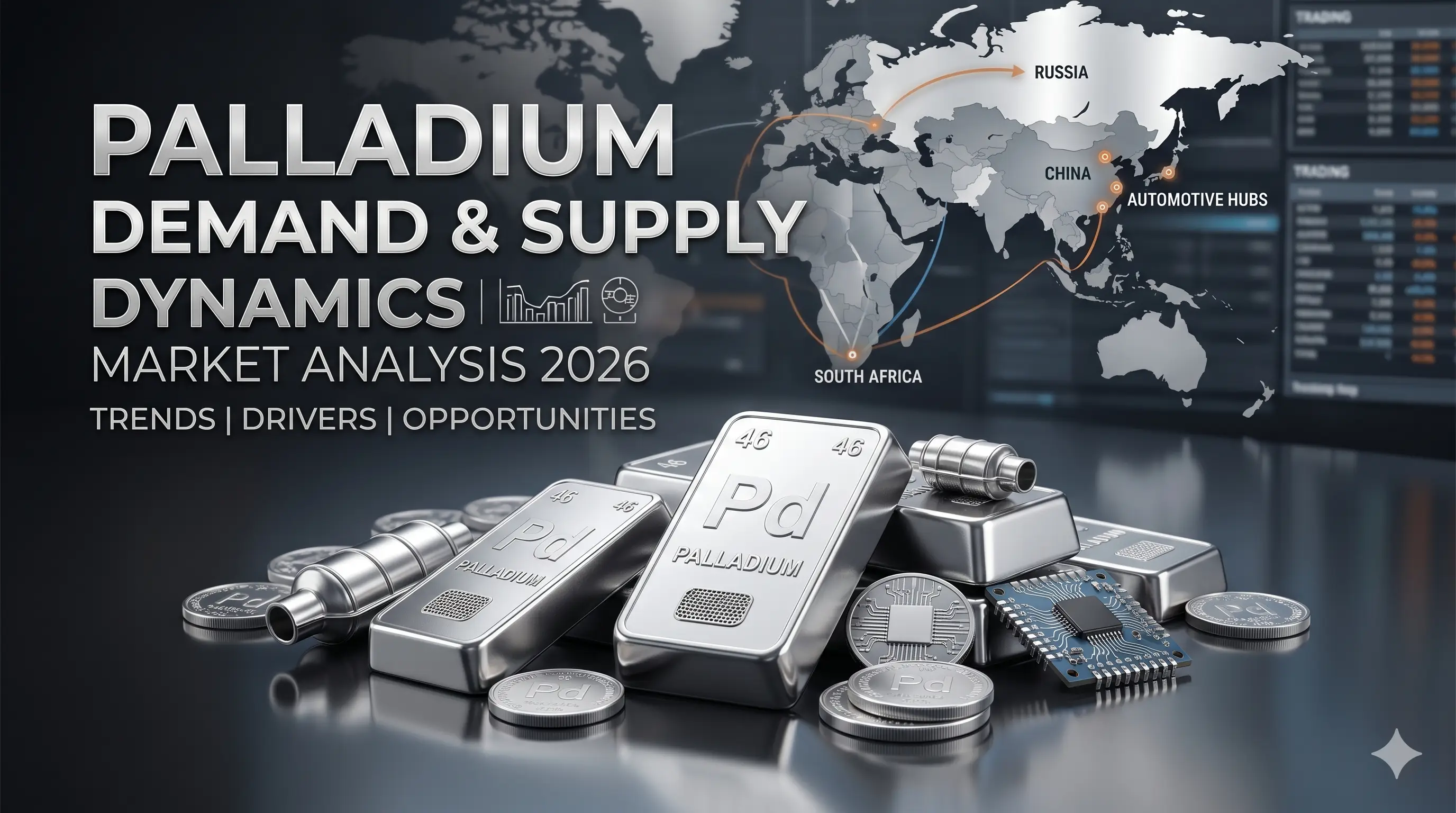
Comprehensive analysis of palladium demand and supply dynamics. Understand market forces, price drivers, and investment implications for 2026.
We publish educational market explainers so readers can connect daily price movement with long-term investing concepts, common risks, and decision-making basics.
Published by Metal Stock Rates and reviewed under our editorial standards on Sunday, February 8, 2026.
- Palladium's Unique Market Position
- Demand Drivers for Palladium
- Automotive Sector Dominance
- Electronics and Technology
- Jewelry and Investment
- Other Industrial Applications
Palladium Demand and Supply Dynamics: Market Analysis for 2026
Palladium, the automotive industry's favorite precious metal, has experienced unprecedented price volatility in recent years. In 2026, as the world grapples with supply chain challenges and shifting demand patterns, understanding palladium's market dynamics becomes crucial for investors and industry stakeholders. This comprehensive analysis explores the intricate balance between demand and supply that drives palladium prices.
Palladium's Unique Market Position
Unlike gold or silver, palladium's value is primarily derived from industrial applications rather than investment demand. This industrial dependency creates unique market dynamics where automotive trends and emission regulations directly impact prices. In 2026, palladium prices have stabilized around $2,500-3,000 per ounce, reflecting a delicate balance between supply constraints and demand growth.
Demand Drivers for Palladium
Palladium demand is heavily concentrated in the automotive sector, with additional applications in electronics and jewelry.
Automotive Sector Dominance
The automotive industry consumes over 80% of global palladium demand. Palladium is essential in catalytic converters that reduce harmful emissions from gasoline-powered vehicles. As emission standards become stricter worldwide, demand for palladium has surged.
- Gasoline vehicle catalysts: Primary application
- Diesel oxidation catalysts: Growing use
- Hybrid vehicle systems: Emerging demand
- Heavy-duty vehicle applications: Commercial sector
Electronics and Technology
Palladium's conductivity and corrosion resistance make it valuable in electronics. It's used in connectors, capacitors, and circuit boards. The growth of 5G technology and electric vehicles could increase this demand.
Jewelry and Investment
While less significant, palladium jewelry represents about 5% of demand. Its white color and durability make it popular for wedding bands. Investment demand comes from ETFs and coins.
Other Industrial Applications
Palladium finds use in chemical processing, dentistry, and hydrogen purification. These applications, though smaller, provide diversification.
Supply Dynamics and Challenges
Palladium supply is even more concentrated than platinum, creating significant market risks.
Primary Production
Russia and South Africa dominate palladium production, accounting for over 80% of global supply. This concentration creates geopolitical risks and supply vulnerabilities.
- Russia: 40% of global production
- South Africa: 40% of global production
- Other countries: 20% (Canada, USA, Zimbabwe)
Mining Challenges
Palladium mining faces numerous challenges including labor disputes, infrastructure limitations, and environmental regulations. South African mines have experienced prolonged strikes, while Russian operations face international sanctions.
Secondary Supply (Recycling)
Recycling provides about 30% of palladium supply. Automotive catalysts from scrapped vehicles are the primary source. As the vehicle fleet ages, recycling could help meet demand, but current recycling rates are insufficient.
Market Balance and Price Implications
The palladium market has experienced significant imbalances in recent years, leading to extreme price volatility.
Historical Supply-Demand Imbalance
From 2018-2022, palladium prices surged from $900 to over $3,000 per ounce due to supply shortages. The market deficit reached 1.5 million ounces annually, creating a supply crisis.
Current Market Conditions
In 2026, the market shows signs of rebalancing. Increased recycling and some production recovery have eased shortages, but demand growth continues. The market deficit has narrowed to about 500,000 ounces.
Price Forecast
Palladium prices are expected to remain elevated in 2026:
- Short-term: $2,500-3,200 per ounce
- Medium-term: Potential for $3,500+ if supply issues persist
- Long-term: $2,000-3,000 range as market balances
Geopolitical and Regulatory Factors
Palladium's market is highly sensitive to geopolitical developments.
Russian Supply Concerns
International sanctions on Russia have disrupted palladium exports. While some supply has been diverted, any escalation could severely impact global availability.
Emission Regulations
Stricter emission standards in Europe, China, and North America continue to drive palladium demand. The shift toward electric vehicles could eventually reduce this demand.
Trade Policies
Trade tensions and tariffs can affect palladium flows. Countries may impose export restrictions to secure domestic supply.
Investment Implications
Palladium's market dynamics create unique investment opportunities and risks.
Investment Vehicles
Investors can access palladium through:
- Physical palladium (bars, coins)
- Palladium ETFs
- Mining company stocks
- Futures contracts
Risk Considerations
Palladium investment carries significant risks:
- High price volatility
- Supply concentration risks
- Geopolitical uncertainties
- Competition from alternative technologies
Future Market Outlook
The palladium market faces several transformative trends:
Electric Vehicle Transition
The shift to electric vehicles could reduce palladium demand as these vehicles don't require catalytic converters. This transition may take 5-10 years to significantly impact the market.
Recycling Growth
Improved recycling technologies and growing vehicle scrappage could increase secondary supply, helping to balance the market.
Alternative Materials
Research into palladium-free catalysts could reduce demand. However, current alternatives are less efficient and more expensive.
Strategic Considerations for Investors
Given palladium's unique characteristics, investors should consider:
- Short-term trading opportunities due to volatility
- Long-term holding for industrial demand
- Diversification across precious metals
- Monitoring automotive industry trends
- Risk management through position sizing
Market Monitoring and Analysis
To stay informed about palladium market dynamics:
- Track automotive production data
- Monitor geopolitical developments
- Follow emission regulation changes
- Analyze mining company reports
- Watch inventory levels in ETFs
In conclusion, palladium's demand and supply dynamics create a fascinating but challenging market environment in 2026. The metal's critical role in automotive emissions control ensures continued demand, while supply constraints from geopolitical factors maintain price pressure. Investors should approach palladium with caution, recognizing both its high reward potential and significant risks. As the automotive industry evolves and recycling technologies improve, the palladium market may undergo significant changes. Stay informed, diversify your investments, and consider consulting financial experts when navigating this complex but potentially rewarding market. The key to successful palladium investment lies in understanding the intricate balance between industrial demand and constrained supply.
Topics Covered
Prepares educational explainers, updates evergreen market guides, and reviews site content for clarity, consistency, and reader usefulness.
For corrections, feedback, or source-quality concerns, visit our contact page or review our editorial policy.